The Different Kinds of Dumpsters (and Which One You Need)
There are more different kinds of dumpsters than most people think.
Some show up for a week, then get hauled away.
Some sit behind your building for years.
Pick the wrong one and you pay for it — in wasted money, in hauling headaches, or in a letter from the village.
American Welding is based in Wayne, Illinois, and we build steel enclosures for the permanent commercial dumpsters you see behind stores and restaurants all over the Chicago area. This guide breaks down the main types in plain English — what each one is for, roughly how big they run, and which kind actually needs a welded enclosure and gate.
The Short Answer: The Main Kinds of Dumpsters
Most dumpsters fall into a few buckets:
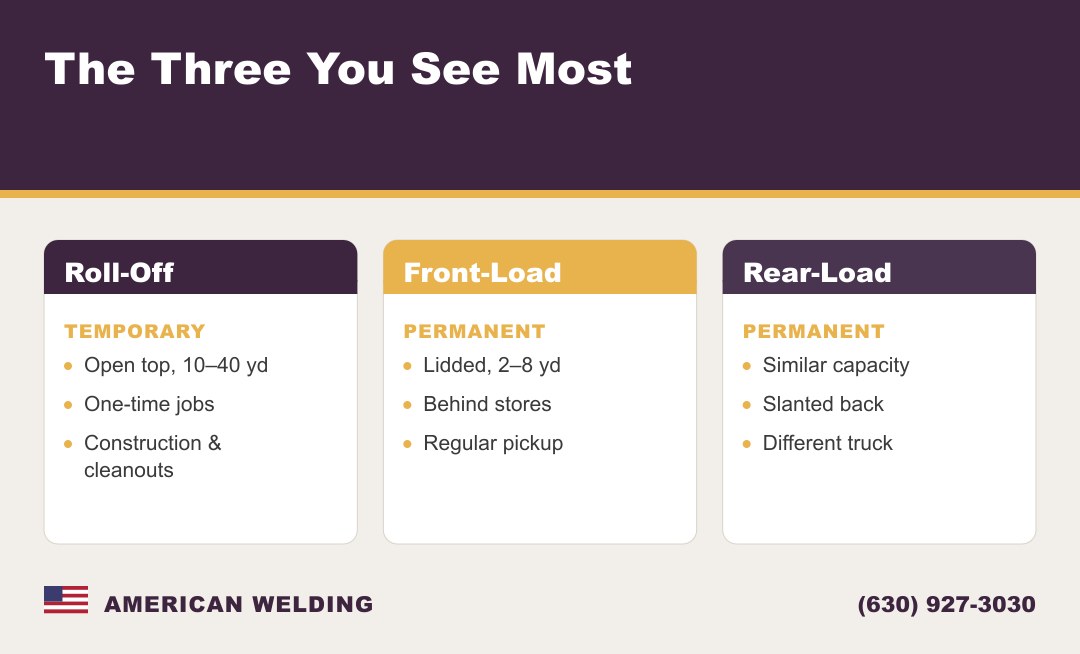
- Roll-off dumpsters — big open-top bins you rent for a temporary job.
- Front-load dumpsters — the lidded bins your business keeps on site for regular pickup.
- Rear-load dumpsters — similar to front-load, with a slanted back and a different truck.
- Specialty containers — compactors, heavy-debris bins, and a few others for specific loads.
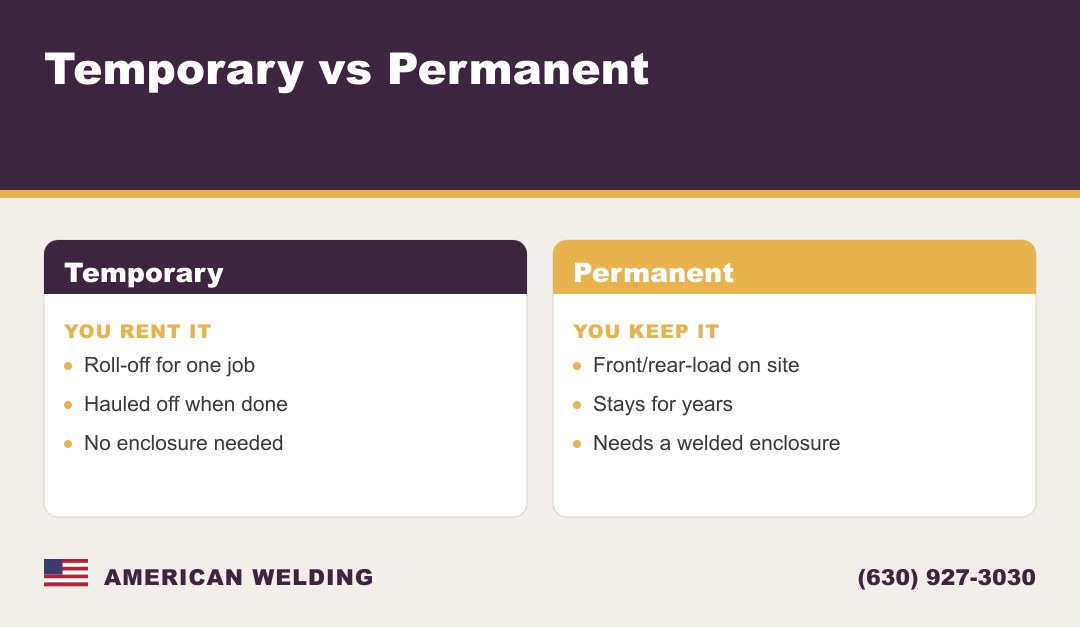
The big split is temporary versus permanent — and that one difference decides whether you need an enclosure. More on that below.
Roll-Off Dumpsters
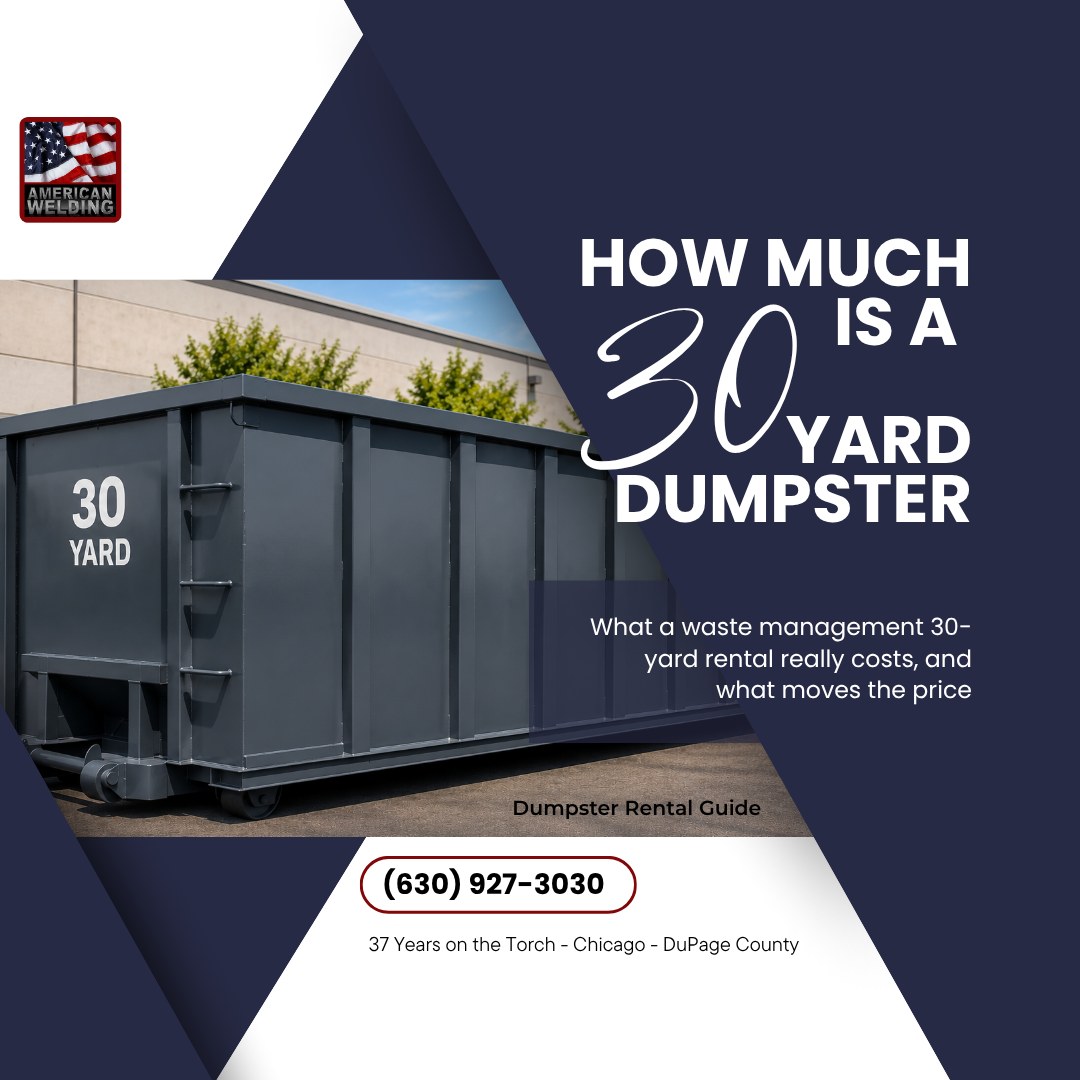
A roll-off dumpster is the big open-top box you have seen on a driveway during a remodel. No lid — debris goes straight in over the top, usually with a swing door on one end for walking heavy stuff in.
They run large — usually 10 to 40 cubic yards. A roll-off truck delivers the empty bin and later hauls the full one away. That is where the name comes from.
Roll-offs are built for temporary jobs: construction, tear-offs, big remodels, garage and estate cleanouts, roofing. You rent one, fill it, and it is gone.
Watch the weight. Most roll-offs carry a limit of roughly 1 to 6 tons, depending on size and hauler. Heavy material like dirt, concrete, or shingles hits that limit fast, so a smaller bin is often the right call for dense debris. For the exact footprint of a common size, our sibling guide 20-Yard Dumpster Dimensions walks through it.
Front-Load Dumpsters
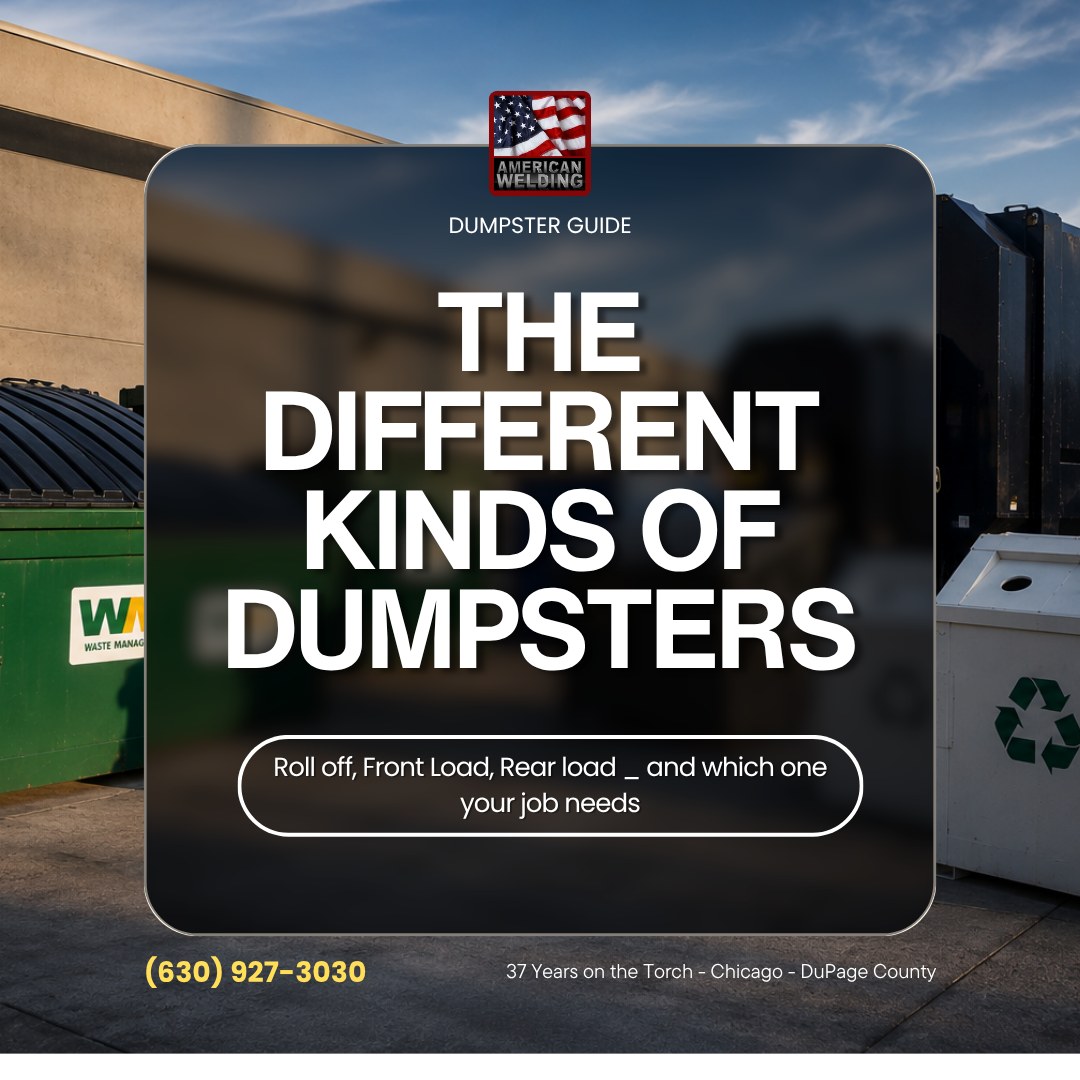
Front-load dumpsters are the ones you picture behind a strip mall or a restaurant. Smaller than a roll-off, with a lid on top and sloped sides. Two sleeves on the sides let a front-load truck lift the bin up and over the cab and into the hopper.
These are the permanent commercial bins — usually 2 to 8 cubic yards, kept on site and emptied on a set schedule to match your trash volume.
Because a front-load dumpster lives in one spot for years, in plain view of customers, it is the kind that usually ends up inside an enclosure — for both looks and local rules. We will get to that.
Rear-Load Dumpsters
A rear-load dumpster is a close cousin of the front-load bin. It holds about the same amount, but the back is slanted and it has a notched lip designed for a rear-load truck to hook and tip.
You will see these at smaller businesses and older properties where the truck loads from behind instead of over the top. Same idea, different truck. Like front-loaders, they are permanent bins that stay put — so they have the same enclosure needs.
Specialty and Other Container Types
Beyond the everyday bins, there are containers built for specific loads:
- Compactors — a bin with a powered ram that crushes trash to fit more in. Common at grocery stores, warehouses, and apartment complexes.
- Concrete and heavy-debris bins — shorter, tougher containers rated for dense material so you do not blow past the weight limit.
- Recycling and cardboard bins — usually front-load style, marked and often kept right beside the trash dumpster.
Most still land on one side of the same line: hauled off after a job, or kept on your property full time.
Temporary vs Permanent: Which You Need
Here is the simplest way to decide.
Temporary? Get a roll-off. One project, a pile of debris, a clear end date — you rent it, fill it, and the hauler takes it away.
Permanent? Get a front-load or rear-load dumpster. Your business makes trash every day, so you keep a bin on site and have it emptied on a schedule.
That second group — the permanent bins your business keeps — is what this guide is really about, because those are the ones that need an enclosure.
Common Dumpster Sizes at a Glance
Sizes vary by hauler, but here is the general lay of the land:
- Roll-off (temporary): 10, 20, 30, and 40 cubic yards. A 20-yard is the workhorse for most home projects.
- Front-load (permanent): 2, 4, 6, and 8 cubic yards. Most restaurants and shops land on a 4 or 6.
- Rear-load (permanent): roughly 2 to 8 cubic yards, same range as front-load.
Cubic yards measure volume, not weight — a 6-yard bin of cardboard weighs a fraction of a 6-yard bin of wet debris. When you are hiding one on your property, the footprint matters more than the yardage; our guide How to Hide a Dumpster covers the screening side.
The Enclosure a Permanent Dumpster Needs
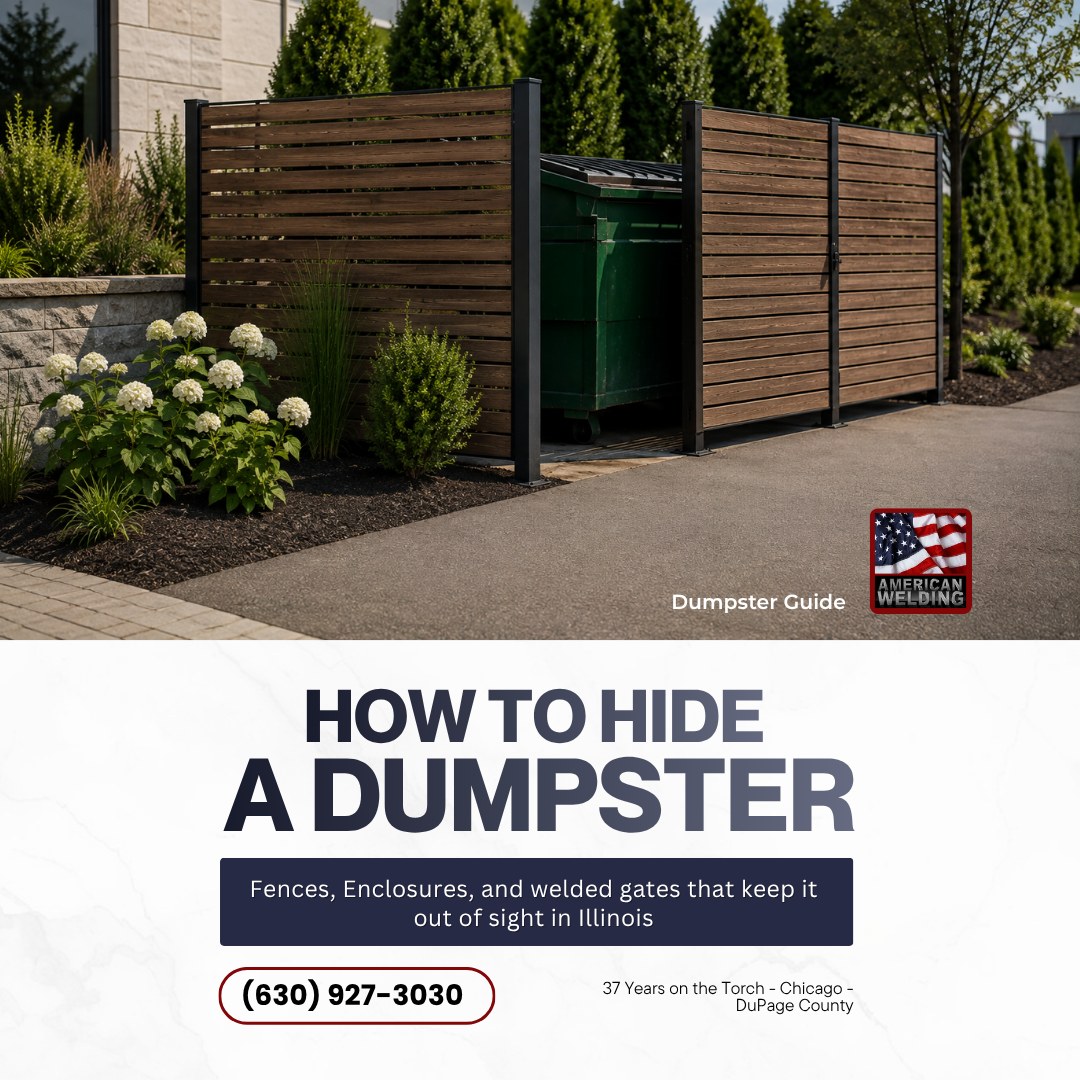
Here is the part that matters for your property. A permanent front-load or rear-load dumpster sits in the same corner of your lot for years — exactly what needs a welded steel enclosure with gates. Three simple reasons why.
Looks. A bare dumpster in view of your storefront is an eyesore. A clean enclosure hides it and makes the whole property look cared for.
Code. Most towns around Chicago and DuPage County require commercial trash to be screened from the street and neighbors. Many will not sign off on a build or a remodel until the dumpster is properly enclosed.
Containment. Gates keep the lids from banging open in the wind, keep loose trash from blowing across the lot, and keep animals and after-hours dumping out.
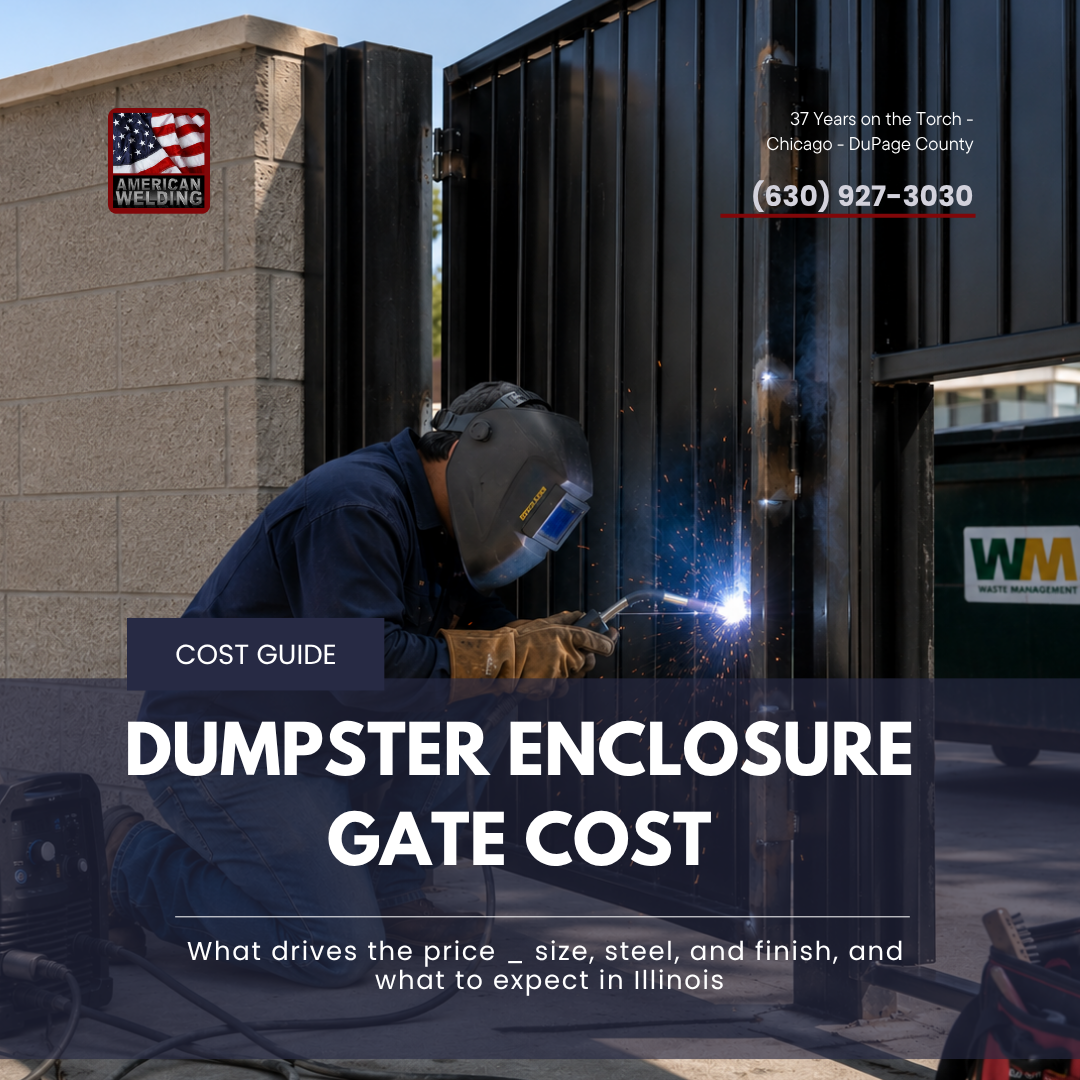
This is real steelwork, not a fence-panel kit. A proper dumpster gate takes a beating — it gets swung open by a hauler and shoved by a truck week after week — so the posts, hinges, and frame have to be welded to last. American Welding builds heavy-duty dumpster enclosures and gates through welded gate services and custom fabrication, sized to your exact bin and set on your existing pad or a new one.
Service Areas
We build and install dumpster enclosures across the Chicago area and the western Illinois suburbs from our shop in Wayne.
- DuPage County — Naperville, Wheaton, Downers Grove, Lisle, Oak Brook, Hinsdale
- Cook County — Chicago, Schaumburg
- Kane County — Aurora, St. Charles
- Will County, Kendall County, and McHenry County
Why Choose American Welding for Dumpster Enclosures
American Welding is owned and run by Pete Adams, a veteran welder who has been on the torch for about 37 years — in business since 1989. When you hire us, Pete does the work.
We are mobile and in-shop, so we measure your bin and pad on site, fabricate the frame and gates, and install the whole enclosure — no chasing three different contractors. Our mobile welding rig means repairs and adjustments happen right in your lot.
Every enclosure is built to fit your dumpster and your property — no flimsy hardware. Our workmanship is guaranteed in writing, we are fully insured on every job, and we give you a clear quote before any work starts, with no surprise trip fees.
Frequently Asked Questions
What is the difference between a roll-off and a front-load dumpster?
Size and purpose. A roll-off is large (10 to 40 cubic yards), open on top, and rented for a temporary job. A front-load is smaller (2 to 8 cubic yards), has a lid, and stays on your property permanently for scheduled pickups.
Which dumpster do I need for a home remodel?
A roll-off. For most home projects a 20-yard bin is the sweet spot — just watch the weight limit with heavy material like concrete or shingles.
Which kind of dumpster needs an enclosure?
The permanent ones — front-load and rear-load bins that stay on your property. Because they sit in one spot for years and in plain view, they need a welded steel enclosure for looks, code, and containment.
Why not just use a wood fence instead of a welded enclosure?
A wood fence around a working dumpster does not last. Gates get swung open and slammed by haulers, and a truck eventually clips a post. Welded steel posts and frames stand up to that abuse for years, which is why we build the structure in steel.
Does my town require a dumpster enclosure?
Most towns around Chicago and DuPage County require commercial trash to be screened from view, and many tie it to your building or occupancy permit. Rules vary by village, so check your local code — an enclosure is usually how you meet it.
Can you build an enclosure to fit my existing dumpster?
Yes. We measure your bin and pad, then fabricate the frame and gates to fit — whether you have a 4-yard front-load or a larger rear-load.
How much does a dumpster enclosure cost?
It depends on the size, the gates, and your site. We give you a clear quote before any work starts, with no surprise trip fees, so you know the number up front.
Ready to Enclose Your Commercial Dumpster?
If you keep a permanent dumpster behind your business, a solid steel enclosure keeps your property clean, keeps you on the right side of local code, and keeps the mess contained. We build it to fit, and we build it to last.
American Welding serves Chicago, DuPage County, and the surrounding Illinois suburbs from our shop in Wayne, Illinois.
Call or text (630) 927-3030 or email pete@americanwelding.us to walk through your project.