How to Hide a Dumpster
If you are figuring out how to hide a dumpster, you are already ahead of most property owners.
That steel bin by the back door is the first thing nobody wants to see.
It catches wind-blown trash, draws pests, and drags down the look of the whole lot.
Hiding it is easy. Hiding it so it stays hidden for years is where most people go wrong.
At American Welding, we build and repair dumpster enclosures across the Chicago area. Owner Pete Adams has welded since 1989 — about 37 years on the torch — and from our shop in Wayne, Illinois we see the same thing constantly: the wood screen someone put up two summers ago already leaning, split, or knocked flat by the hauler's truck. Here are your real options and why welded steel wins for daily commercial use.
The Short Answer: The Best Ways to Hide a Dumpster
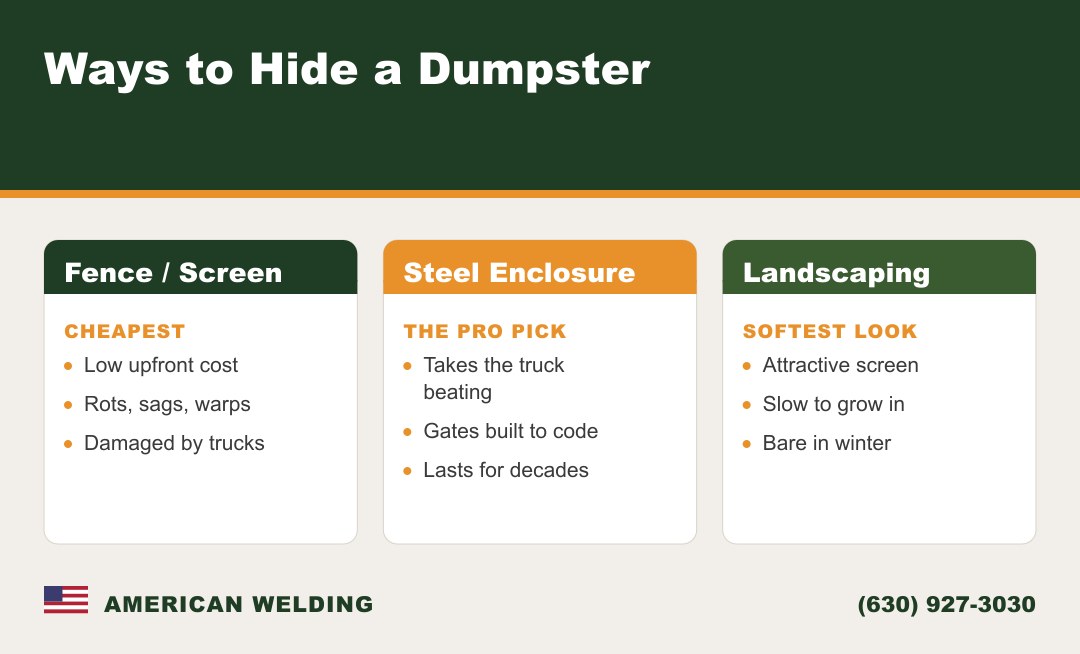
There are three practical ways to get a dumpster out of sight. The right one depends on how much abuse it takes and how long it has to last.
- A fence or screen wall — cheapest and fastest, but wood and vinyl rot, sag, and split, and they do not survive a garbage truck clipping them.
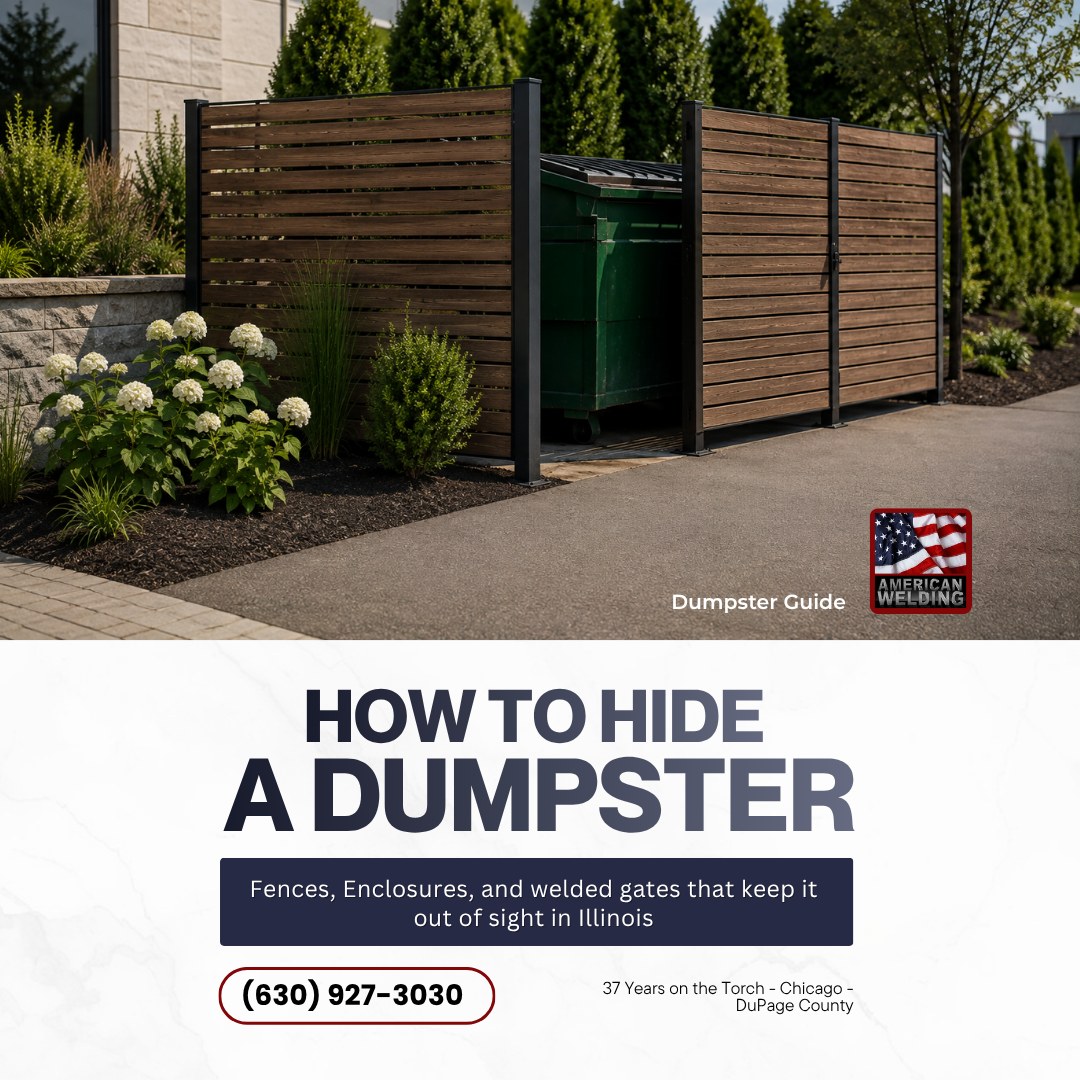
- A welded steel enclosure with gates — the strongest option and the pro choice. It takes the daily beating from trucks and slamming lids and lasts for decades.
- Landscaping and living screens — attractive once grown, but slow to fill in and thin every winter.
Why Hiding a Dumpster Is Worth It
An exposed dumpster costs you more than looks. A proper screen buys you:
- Curb appeal. A clean, screened trash area tells customers and tenants you run a tight operation.
- Code and HOA rules. Many towns across Illinois, plus most HOAs and commercial districts, require trash screened from the street and neighbors.
- Pest and litter control. A solid enclosure keeps raccoons, rats, and dogs out and stops wind from scattering loose trash across the lot.
- Value and tenants. A tidy trash area quietly makes a property easier to lease and to sell.
Option 1: A Fence or Screen Wall
The common first move is a wood or vinyl fence, or a simple screen wall. It is cheap, goes up fast, and can look sharp on day one.
The trouble shows up later. Wood rots at the posts and warps until the gate will not latch; vinyl turns brittle in the cold and cracks when bumped. The real killer is the truck — a hauler swinging a bin will clip a wood gate sooner or later, and then you are back to square one. It works, but plan on repairs.
Option 2: A Welded Steel Dumpster Enclosure
This is what we build, and what we recommend for any bin serviced regularly. A welded steel frame with heavy gates is in a different league from wood — it does not rot, sag, or fold when a truck taps it.
The heart of it is the dumpster gate, the part that takes the most punishment. Every pickup, those gates get swung, banged, and bumped by the bin itself. A welded gate on real hinges, built to the right width, keeps working year after year. Our welded gate services and custom fabrication size the whole enclosure to your exact bin and space, so nothing is too tight and nothing flaps in the wind. Steel costs more up front than wood and far less over the life of the property, because you build it once.
Option 3: Landscaping and Living Screens
Plants can be a beautiful way to soften a trash area. Arborvitae, tall grasses, or a hedge can wrap a bin until it nearly disappears, and nothing gets knocked over because it bends and grows back.
The catch is time and seasons. A living screen takes two or three years to fill in, thins over an Illinois winter, and needs water and trimming. It is a great finishing touch around a solid enclosure, but on its own it will not hide a dumpster the day you need it hidden, and it will not stop a truck or a raccoon.
Which Option Lasts the Longest
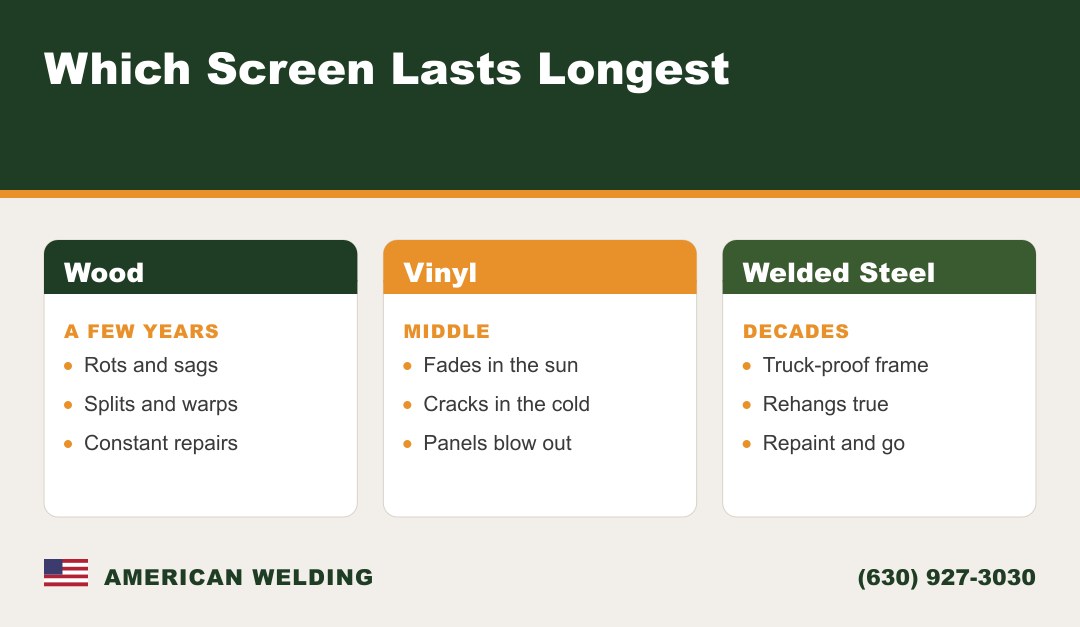
If longevity is the question, it is not close. A welded steel enclosure outlasts a wood fence three or four times over, because it takes the one thing wood and plants cannot — the weekly beating from a garbage truck.
Wood and vinyl need repair within a few years; landscaping is seasonal and slow. Steel just does its job, long after the surrounding fence has been replaced twice.
Keeping It to Code and Easy to Service
A screen only works if the hauler can still do their job. This is where many do-it-yourself enclosures fail — they hide the bin but make it a pain to service.
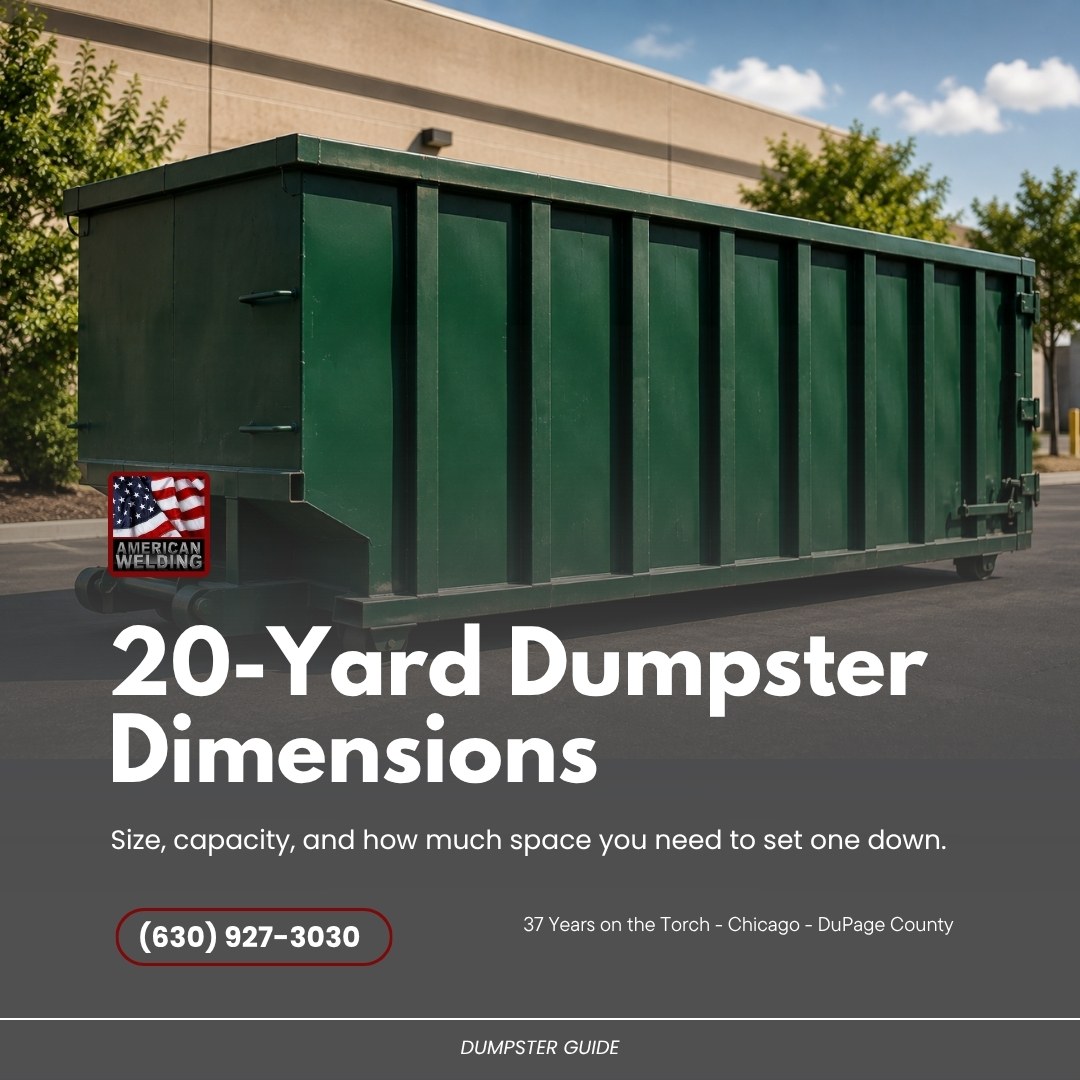
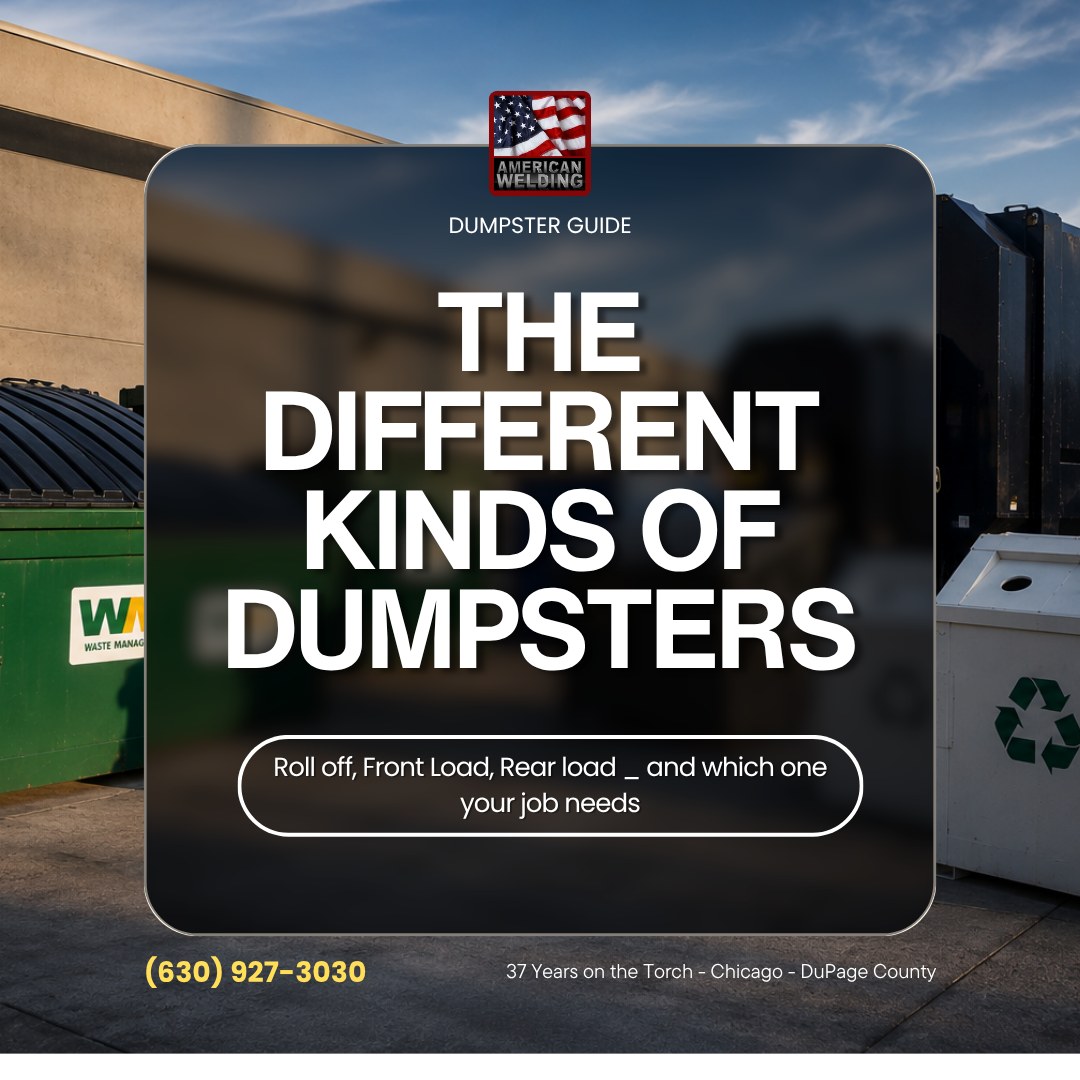
The gates must be wide enough for the truck's arms or for the bin to roll straight out. The posts sit deep in concrete so the gates hang true and do not sag. And the truck needs clearance to pull in, drop, and lift without catching the walls. Sizing all this starts with knowing your bin — if you are not sure which you have, our guide The Different Kinds of Dumpsters breaks down the common types, and 20-Yard Dumpster Dimensions gives the footprint for one of the most popular sizes. Get the dimensions right and the enclosure fits the bin, the truck, and local code all at once.
Building a Dumpster Enclosure That Holds Up
A steel enclosure that lasts is not complicated, but every step matters.
- Measure the bin and the approach so the opening and clearance are right before any steel is cut.
- Set the posts in concrete so the gates hang square and do not lean after the first hard winter.
- Weld the frame into one rigid unit — no bolts working loose, no wobble.
- Hang the gates on strong hinges with a solid latch and a drop pin to hold them open during pickup.
- Panel and finish with steel or composite infill and a finish that keeps rust off for the long haul.
Because our work is mobile, we handle custom fabrication in the shop and final fit-up on your site, so the enclosure is matched to your lot, not forced out of a kit. One bin or a full row for a plaza, our mobile welding crew builds it to take the abuse.
Service Areas
American Welding builds and repairs dumpster enclosures on-site and in-shop across Chicagoland and the wider Midwest, working out of our home base in Wayne, Illinois.
- DuPage County — Naperville, Wheaton, Downers Grove, Lisle, Oak Brook, Hinsdale
- Cook County — Chicago, Schaumburg
- Kane County — Aurora, St. Charles
- Will County, Kendall County, and McHenry County
Why Choose American Welding for Dumpster Enclosures
Pete Adams has welded since 1989 — about 37 years of doing it right the first time. From our shop in Wayne, Illinois, we build dumpster enclosures, gates, and screens made to survive commercial use, not just look good on install day.
We work mobile and in-shop, fully insured on every job, and we set up carefully so your property stays clean and safe. Our welded gate services and custom fabrication mean the enclosure fits your bin and space exactly — and the workmanship is guaranteed in writing.
Frequently Asked Questions
What is the cheapest way to hide a dumpster?
A wood or vinyl screen fence is cheapest up front. It suits light residential use but rots, sags, and cannot survive a garbage truck. For a regularly serviced bin, a welded steel enclosure costs less over time because you build it once.
How wide should a dumpster enclosure gate be?
Wide enough for the truck's arms or for the bin to roll straight out with room to spare. The exact width depends on your dumpster and how the hauler services it, so we measure the bin and the truck's approach first. A gate that is too narrow gets torn off.
Does a steel dumpster enclosure need to meet code?
Often, yes — many towns and HOAs require trash screened from the street and neighbors, and a structure may need a permit. Rules vary from one Illinois community to the next, so we build to fit local requirements.
How long does a welded steel enclosure last?
Decades, with basic care. Steel does not rot or warp, and a welded frame with posts set in concrete shrugs off the weekly beating from trucks and lids — outlasting a wood fence three or four times over.
Can you hide a dumpster with landscaping alone?
You can soften and partly hide one with hedges or tall grasses, and it looks great once grown. But plants take years to fill in, thin over winter, and will not stop a truck or a pest. It works best around a solid steel enclosure.
What does a dumpster enclosure cost?
It depends on the size, the gates, and the site, so we give you a clear quote before any work starts — no surprise trip fees. Tell us your bin and your lot and we will walk you through it.
Ready to Get That Dumpster Out of Sight?
You do not have to keep looking at that bin, or rebuild a wood fence every few years. A welded steel enclosure hides the dumpster, keeps pests and blowing trash under control, and takes the truck's weekly beating without complaint.
Whether you need one enclosure for a restaurant or a full row for a plaza across DuPage County or Chicago, we build it to fit your bin, your lot, and your local code — and back it in writing.
Call or text (630) 927-3030 or email pete@americanwelding.us to walk through your project.