The Laser Welding Process Explained — How It Actually Works
Most people picture laser welding as something out of science fiction: a beam of light cutting through metal like a movie laser. The reality is more straightforward and more interesting.
Laser welding doesn't cut. It melts a tiny spot of metal so precisely that the surrounding piece never even gets warm. Once you understand how that works, you understand why laser welding shows up in everything from surgical instruments to mold repair.
This blog walks through the laser welding process step by step.
Decades of hands-on welding have shown that the people who get the most out of laser welding are the ones who understand what's actually happening when the beam fires.
What Laser Welding Actually Does
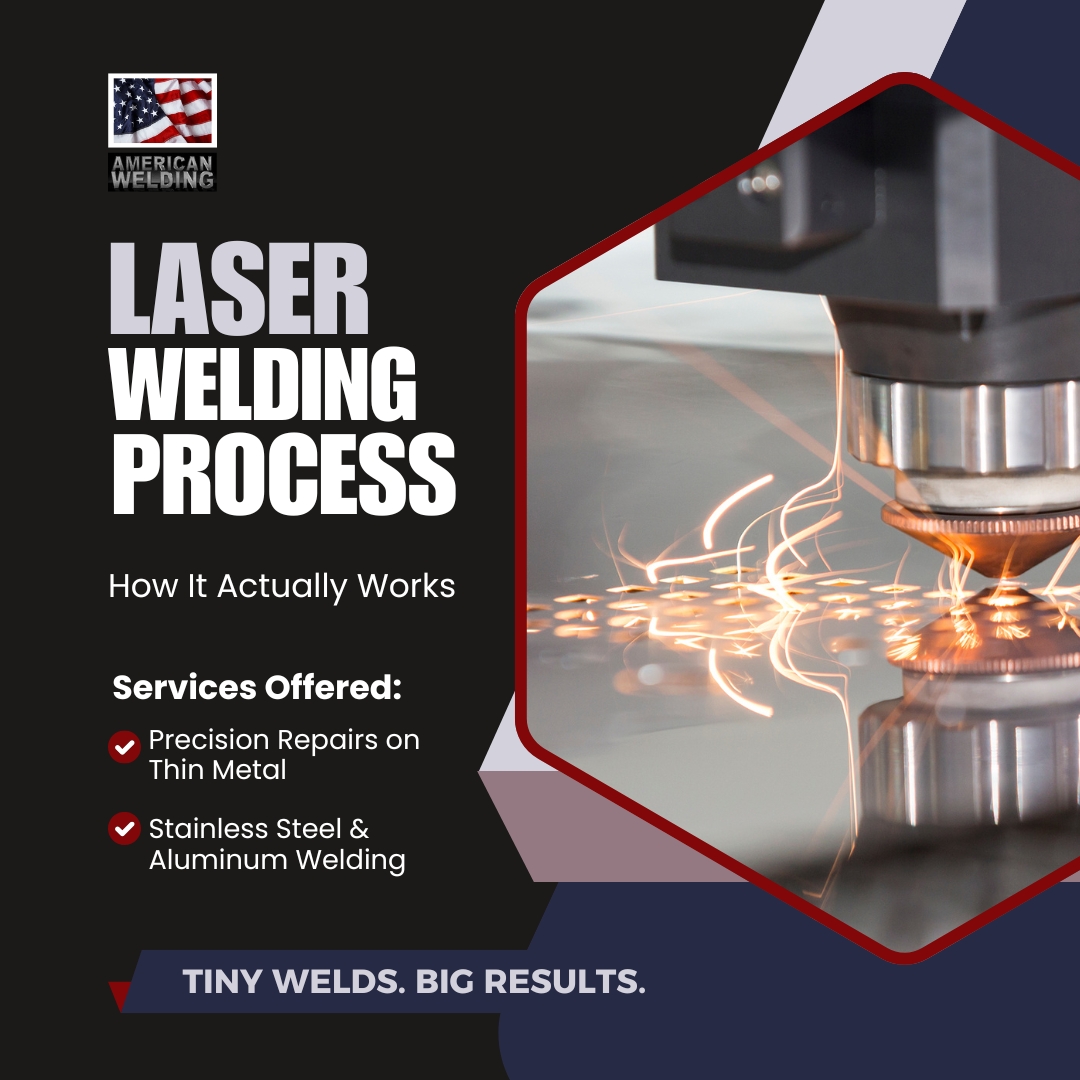
Laser welding uses a tightly focused beam of light to melt metal. The light hits a single spot on the joint, heats that spot quickly enough to melt the metal, and the surrounding area stays cool because the heat never spreads.
Two key things make this different from a torch:
- The heat is concentrated: only the spot under the beam reaches the melting temperature
- The weld is fast: most laser welds happen in fractions of a second
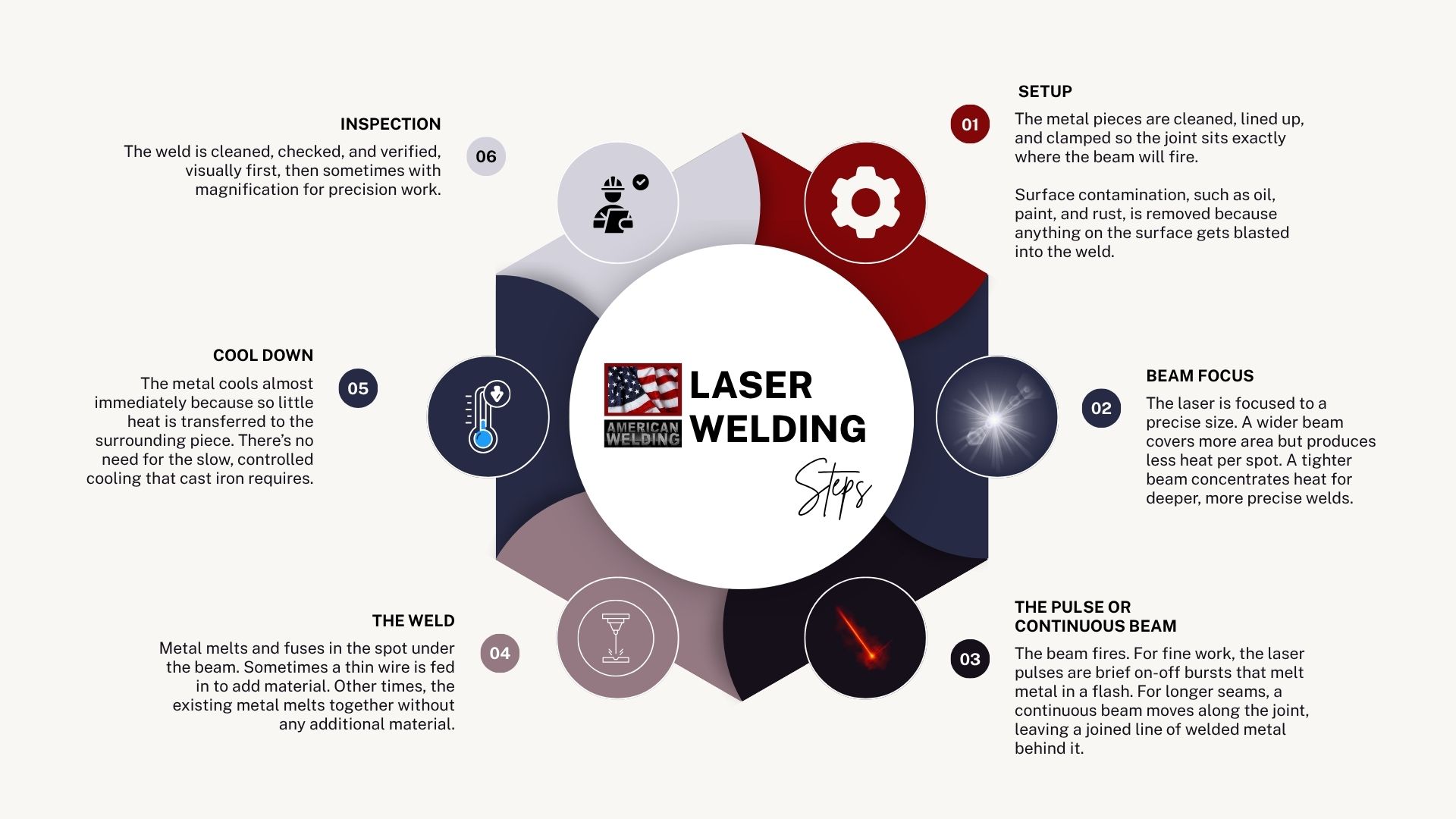
The Steps of the Laser Welding Process
A laser weld follows the same basic sequence every time:
From start to finish, a small laser weld can be done in seconds.
The Equipment That Makes It Work
A laser welding setup has a few core pieces:
- The laser source: either a continuous-beam laser or a pulsed laser, depending on the work
- A focusing lens sets the beam size
- A controlled work surface: the part is held steady in a clamp or holder
- Safety enclosure: laser welding requires shielding from the bright light
- A wire feeder, when needed, adds metal into the joint for some welds
- A shielding gas, when needed, keeps oxygen away from the weld so it stays clean
The whole setup lives in a controlled environment. Unlike mobile welding, laser welding doesn't travel; the work comes to the laser.
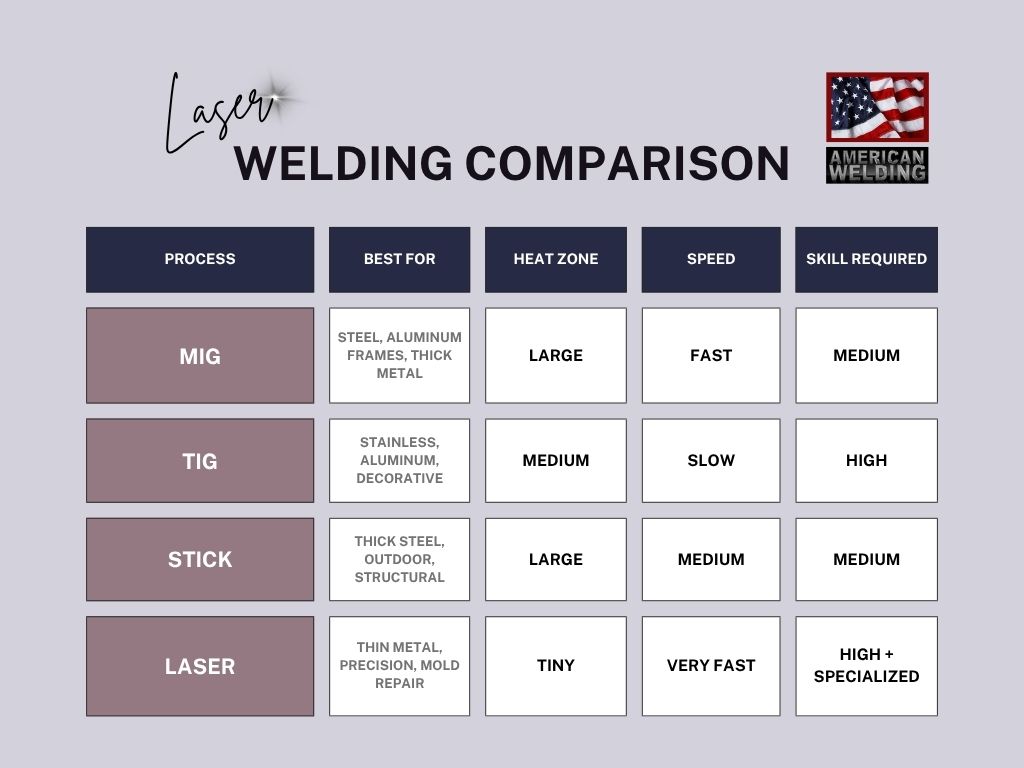
How Laser Welding Compares to MIG, TIG, and Stick
Each welding process has its place. Laser welding doesn't replace the others; it adds capability for jobs the others can't handle well.
The big advantages of laser welding:
- Precision
- Speed on fine joints
- And minimal damage to the surrounding metal.
The trade-offs:
- Shop-only
- More expensive equipment
- And limited to certain job types.
Metals That Laser Welding Handles Best
Laser welding works on most common metals, and a few that traditional welding struggles with:
- Stainless steel — surgical tools, decorative pieces, kitchen equipment
- Aluminum — thin panels, marine fittings, custom parts
- Carbon steel — precision components, mold repair
- Titanium — high-performance parts
- Copper and brass — fine repairs, decorative joins
- Gold and silver — jewelry repair
- Mixed metals — some combinations that traditional welding can't handle
What matters is the thickness, the cleanliness, and how the pieces are cut and lined up. Even within the same metal type, some pieces are great candidates for laser welding, and others aren't.
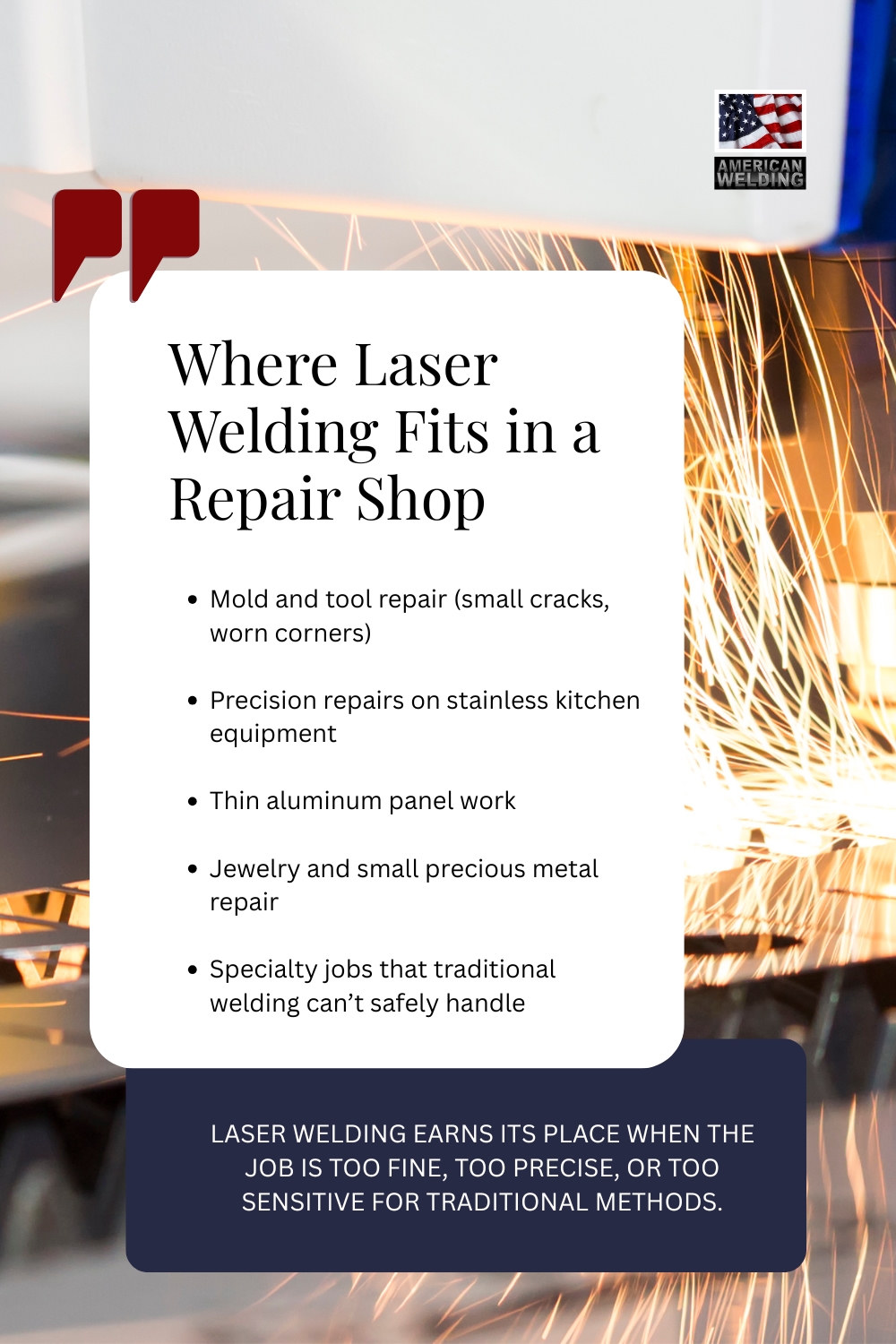
Where Laser Welding Fits in a Repair Shop
Not every shop needs a laser welder. The ones that do tend to handle:
For most everyday structural or repair welding, such as fences, frames, gates, and trailers, MIG, TIG, or Stick welding is faster and more cost-effective.
Frequently Asked Questions
Is laser welding the same as laser cutting?
No. Laser cutting uses a high-powered beam to cut through metal. Laser welding uses a controlled beam to melt metal in a specific spot without cutting through. The same kind of laser source can sometimes do both, but the techniques are different.
Can laser welding be done outdoors or on-site?
Generally no. Laser welding needs a controlled environment for safety and precision. Field welding goes to a service truck with MIG, TIG, or Stick equipment.
How small can a laser weld be?
Very small, fractions of a millimeter. That's why laser welding shows up in jewelry, surgical tools, and electronics repair.
Does laser welding require special training?
Yes. Laser welding combines hand skill with knowledge of beam settings, focus, materials, and safety. It's not a beginner-level process.
Is laser welding stronger than TIG?
For fine joints and thin metal, laser welding produces very strong welds with minimal damage to the surrounding piece. For thick structural work, TIG and MIG are usually stronger because they put more heat into the joint.
Can laser welding repair a cracked engine block?
Usually no. Engine blocks are made of thick cast iron and need the heat and depth that traditional Stick welding with nickel rod gives. Laser welding works best for thin, clean metal — not thick cast iron pieces.
What gas is used in laser welding?
When a shielding gas is needed, argon is the most common, sometimes mixed with helium. The gas keeps oxygen away from the weld so the joint stays clean.
Why is laser welding so expensive compared to traditional welding?
The equipment costs more, the setup is more involved, and the work requires specialized skill. For small precision repairs, those costs pay off because the alternative is often full part replacement.
When Is the Laser Welding Process Worth It
Laser welding is the right call when:
- The metal is too thin for a torch
- The surrounding area can't tolerate heat
- The weld has to be invisible or near-invisible
- The repair is fine, precise, or in a tight spot
- Traditional welding has been tried and has failed
For everything else, traditional welding is usually the better and cheaper answer.
Need a Laser Welding Quote or Want to Know If Your Job Fits?
American Welding handles precision repairs, mold and tool work, thin-metal welds, and specialty parts across Chicago and the suburbs.
📞 Call or text: (630) 927-3030
📧 Email: pete@americanwelding.us
🛠️ Service area: Chicago, DuPage County + suburbs + the Midwest
✅ Welding services. Workmanship guaranteed.
Related services: Laser Welding Service · TIG Welding Service · Aluminum Welding · Mobile Welding & Repair