What Is Ornamental Iron?
If you have ever run your hand along a curving stair rail or pulled up to a tall driveway gate, you have already met ornamental iron.
The name sounds old-world, but almost all of it today is modern metalwork.
The short answer: ornamental iron is decorative-but-structural metalwork — railings, gates, fences, and scrollwork — usually made from mild steel today, shaped and welded, then finished to last outdoors.
At American Welding, we build ornamental iron for homes and businesses across Chicagoland. Owner Pete Adams has welded since 1989 — roughly 37 years on the torch — and from our shop in Wayne, Illinois we fabricate the rails, gates, and decorative pieces people usually picture when they hear the word. Here is what ornamental iron really is, where you see it, and how it is made.
What "Ornamental Iron" Actually Means
Ornamental iron is metalwork that is meant to be seen and to do a job at the same time. That is the whole idea: a rail that looks sharp and also keeps someone from falling down the stairs, a gate that frames a driveway and also keeps it secure. It is decorative and functional in one piece — not sculpture you only look at, and not raw structural steel hidden inside a wall.
Here is the part that surprises people. Despite the word "iron," almost everything called ornamental iron today is actually mild steel. True wrought iron — the hand-worked metal of a century ago — is rare and expensive now. Mild steel does the same look for far less, and it is easier to cut, bend, and weld, which is exactly why modern shops reach for it. So when you hear "ornamental iron railing," picture shaped and welded steel with a tough outdoor finish.
Where Ornamental Iron Shows Up
Once you know what to look for, you start seeing ornamental iron everywhere metal has to be both strong and good-looking. Three jobs cover most of what we build.
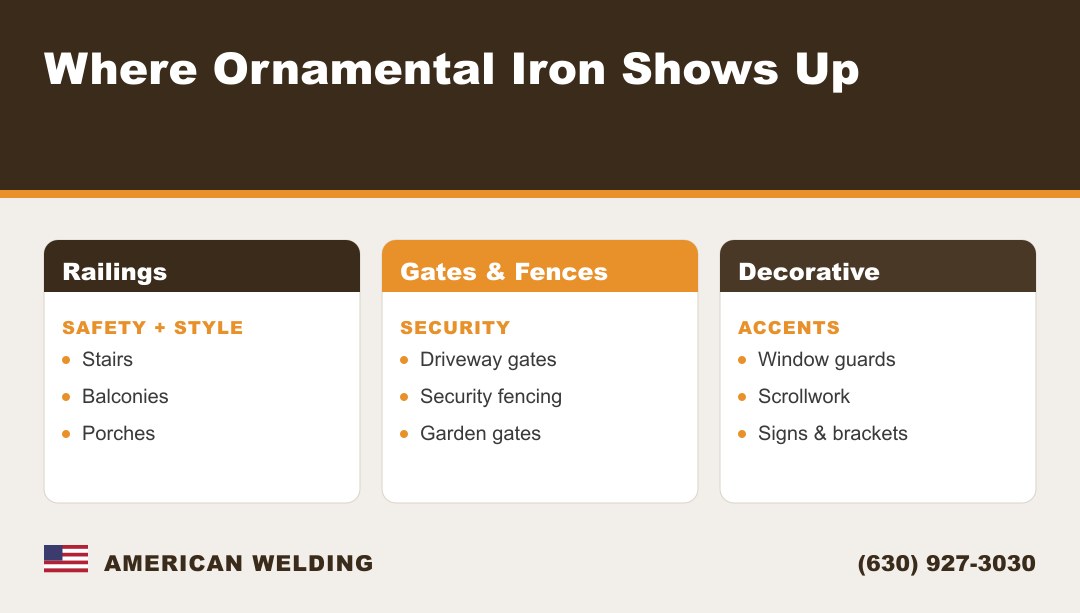
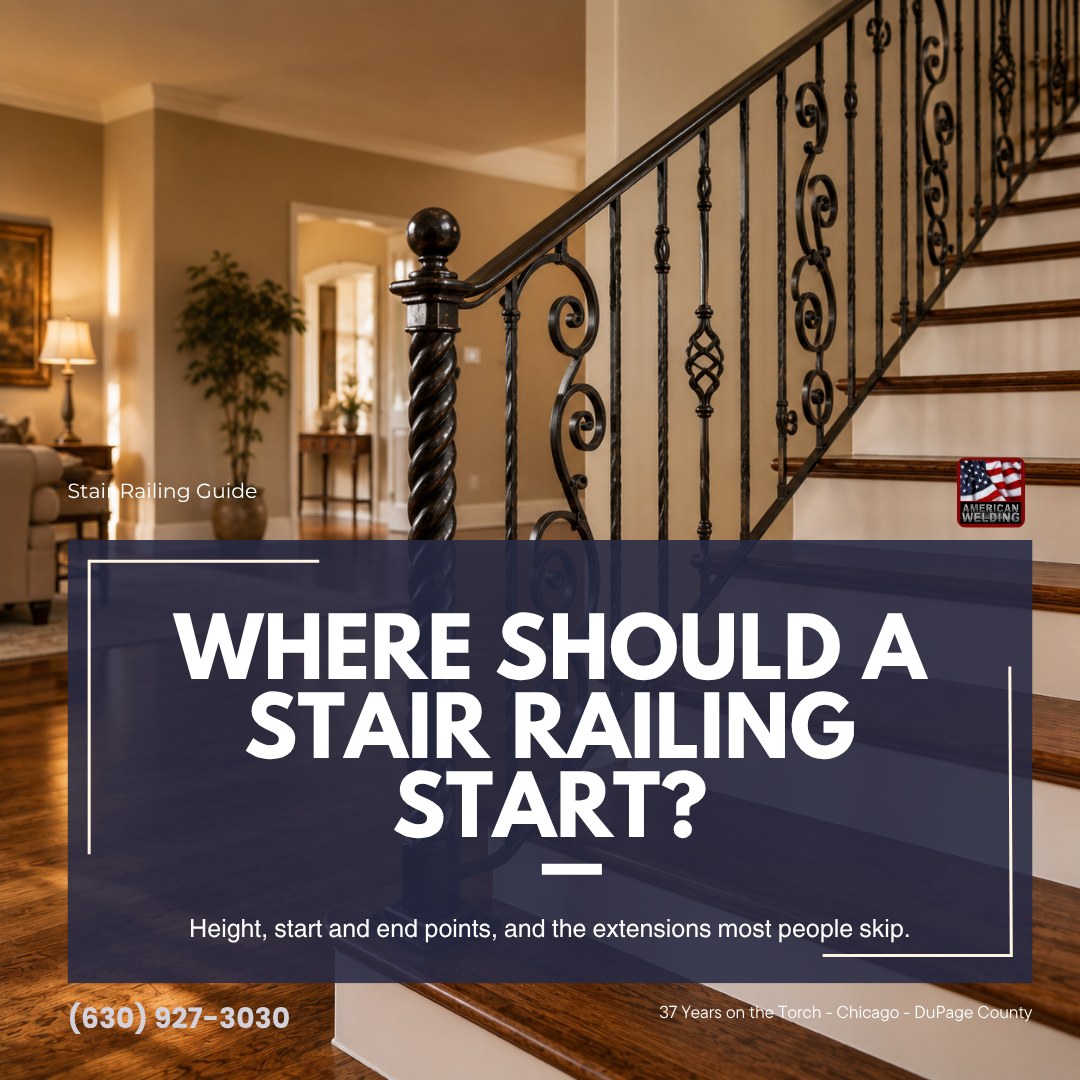
- Railings. The most common use by far — stair railings indoors and out, balcony guards, and patio railings along porches and decks. These have to look clean and hold firm when someone leans on them.
- Gates and fences. From driveway gates that frame an entrance to security fencing around a yard or lot, this is ornamental iron doing heavy daily work while still looking the part.
- Decorative pieces. Window guards, scrollwork, signs, and brackets — the smaller touches that add character to a building and often serve a purpose too, like keeping a ground-floor window secure.
Wrought Iron vs Mild Steel
People toss around "wrought iron" and "ornamental iron" as if they are the same thing. They are not, and the difference comes down to the metal itself. It helps to see the two side by side.
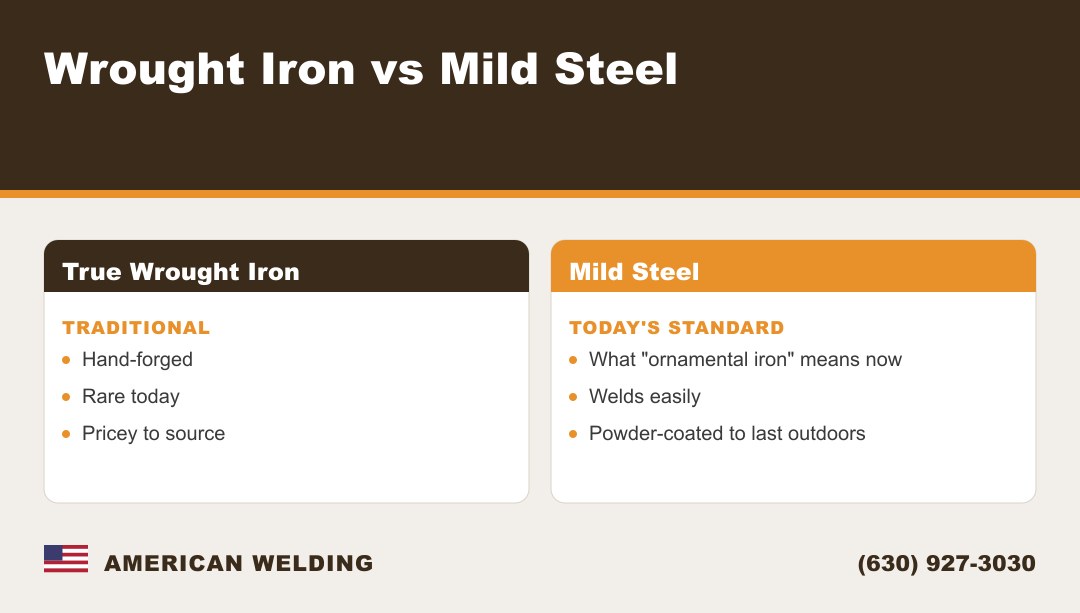
- True wrought iron. The traditional stuff — hand-forged over a fire, worked by hammer, and full of character. It is beautiful and historic, but genuine wrought iron is rare and pricey today, and very few shops still produce it from scratch.
- Mild steel. What "ornamental iron" usually means now. It welds easily, takes almost any shape, and gets powder-coated or painted so it holds up outdoors for years. You get the classic wrought-iron look at a sensible price, which is why it is the everyday choice.
For most homeowners, mild steel is the smart pick. It gives you the same handsome rail or gate, it is far easier to repair if it ever gets bent, and a good finish keeps it looking right through plenty of Illinois winters.
How Ornamental Iron Is Made
Turning flat lengths of steel into a finished rail or gate follows the same handful of steps, whether the piece is plain or covered in scrollwork.
- Cut. Bar, tube, and flat stock are measured and cut to length, so every post, picket, and rail lands exactly where the design calls for it.
- Bend and shape. The scrolls, curves, and twists that give ornamental iron its character are formed here, cold-bent or heated so the steel takes the shape without cracking.
- Weld. The pieces are joined into one rigid unit — no bolts to work loose, no wobble. A clean, strong weld is what makes the difference between a rail that holds and one that does not.
- Grind and clean up. Every joint is ground smooth and the surface prepped, so the finish goes on evenly and there are no sharp edges to catch a hand.
- Finish. The piece is galvanized, powder-coated, or painted to keep rust off for the long haul. This last step is what lets ornamental iron live outdoors and still look good years later.
Custom Ornamental Ironwork in Chicagoland
This is what we do every week. From our base in Wayne, Illinois, American Welding fabricates custom stair railings, patio railings, and driveway gates for homes and businesses across Chicago and DuPage County. Because our rigs are mobile, we handle the build in the shop and the final fit-up on your site, so the piece is matched to your exact stairs, porch, or entrance rather than forced out of a one-size kit.
Gates get the most abuse of anything we make, so our welded gate services build them on real hinges, sized right, to keep swinging true year after year. Want to know what a custom rail or gate would run for your place? There is no set price — every project is different. Send Pete a photo or call for a free quote, and we will walk you through it.
Ornamental Iron FAQ
What is ornamental iron made of?
Today, almost always mild steel. The name says "iron," but true wrought iron is rare and costly now, so modern shops use mild steel — it welds easily, bends into any shape, and takes a finish that holds up outdoors, all for a far better price.
Is ornamental iron the same as wrought iron?
Not quite. True wrought iron is hand-forged over a fire and is rare today. "Ornamental iron" is the broader term for decorative metalwork, and most of it is now mild steel shaped to give the same classic look at a sensible cost.
Does ornamental iron rust?
Bare steel can rust, which is why the finish matters so much. Galvanizing, powder-coating, or a quality paint seals the surface and keeps rust off for years. Kept finished and touched up now and then, an iron rail or gate lasts a very long time outdoors.
Is ornamental iron strong enough for railings and gates?
Yes — that is the whole point of it. Ornamental iron is decorative and structural at once. A welded steel rail holds firm when someone leans on it, and a welded gate takes the daily swinging and banging without sagging, as long as it is built and sized to spec.
Can ornamental iron be custom-made to match my home?
Absolutely. Because the steel is cut, bent, and welded to order, the scrollwork, height, and spacing can all be matched to your stairs, porch, or driveway. Custom fabrication is exactly how we fit a piece to your property instead of making you settle for a stock size.
How much does custom ornamental ironwork cost?
It depends on the size, the design, and the site, so there is no flat price. Tell us what you have in mind — send a photo or call Pete — and we give you a clear, free quote before any work starts, with no surprise trip fees.
Thinking About Ornamental Iron for Your Property?
Whether you want a custom stair rail, a porch railing, or a driveway gate that frames your entrance, American Welding builds ornamental iron to look sharp and take the weather — shaped, welded, and finished to last outdoors.
We work mobile and in-shop across Chicago, DuPage County, and the wider Chicagoland area out of our home base in Wayne, Illinois — fully insured, and the workmanship guaranteed in writing.
Call or text (630) 927-3030 or email pete@americanwelding.us for a free quote on your project.